
Collaboration case study, part 1: how a partnership starts when you lead with value
Steve Brossman and Derek Morgan are documenting a real collaboration as it happens. Part 1 covers the introduction, the alignment, and why leading with value turns a good conversation into a next step.
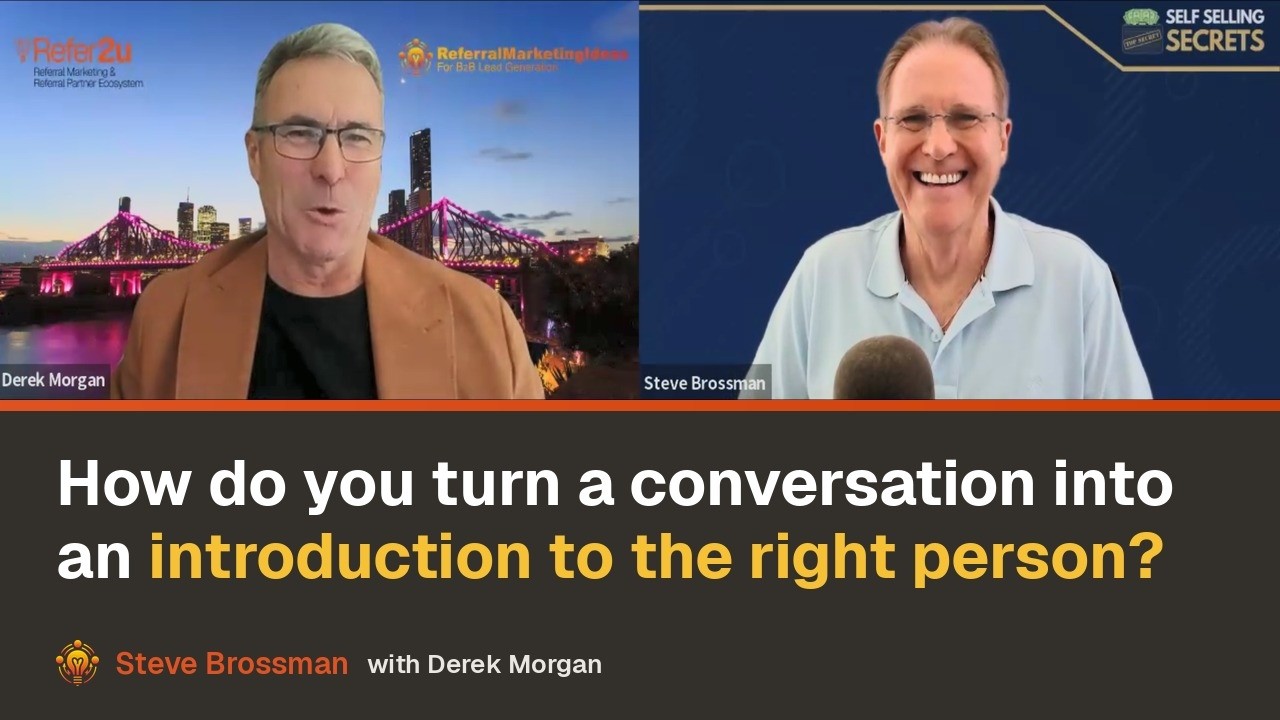
Most collaborations start with a good conversation. Far fewer turn into a plan that either person can point to a month later. Steve Brossman of Expertise Empire and I decided to build ours in the open, documenting each step as it happens, so you can watch what we do, borrow what works and test it in your own business with your Referral Partners.
This is Part 1. It is a 20 minute conversation about how we got here: the introduction, the alignment, and the case for doing this where people can see it. Strategy and implementation come later in the series, as things progress.
Why document a collaboration in real time
Most of what gets published about partnerships is written after the fact, once the result is known and the messy middle has been tidied away. That makes it hard to learn from, because the decisions that mattered are no longer visible.
Documenting it as it happens keeps those decisions on the record. It also changes how we work. When people are watching, every step has to be clear enough to explain, and every claim has to be something we can stand behind. Steve made the point on the call that anyone watching is already forming a view of how we operate. That is the standard we are holding ourselves to.
How the introduction happened
Steve and I did not meet through cold outreach or a chance encounter with content on social media. A mutual connection introduced us, and we had a couple of constructive conversations. Then Steve registered for an event through another mutual connection and saw a presentation I gave with one of my partners, and I joined a speaker panel as a presenter in another online community he was co-hosting.
Two separate settings, both involving people we already knew. By the second, it was clear there was enough alignment to talk seriously about working together. Steve's observation was that many people never join those dots. The connections are there, but nobody follows them through.
We covered why that transferred trust carries so much weight in our first published conversation, How to get referrals without asking. The short version for this series: an introduction from someone you both trust does work that no outreach message can, and it matters more as AI-written content fills every inbox.
Alignment before strategy
Part 1 sits at the alignment stage of the Referral Marketing Formula™. Before either of us designs anything, we need to know whether it makes sense for both businesses and both audiences. That is the purpose of Alignment, and it is why this conversation is about fit and intent rather than plans and numbers. If you want the distinction in a sentence, see alignment versus discovery in the glossary.
Steve and I serve overlapping audiences in different ways. He teaches coaches, consultants and service professionals how to sell through conversation. I work with Referral Partners and the B2B businesses they serve on referral partner relationships and networks. In the language of the Referral Marketing Formula, that makes this a Collaboration Partner relationship, one of the five partner types.
Lead with the value you add
One idea from the conversation is worth taking straight into your next networking meeting. When someone asks Steve who his ideal client is, he does not describe what he does. He starts with who he adds the most value to, says what that value is, and asks whether they know anyone who would benefit from it.
It takes the pressure off both people. Nobody is being pitched and nobody is being qualified. The other person gets something specific enough to act on.
The same logic works with Referral Partners. Ask who your ideal Referral Partners are and what you do for them, rather than opening with your services. It keeps the conversation about value from the first minute.
From a good coffee to a next step
Steve's approach to selling, which he calls Guided Subconscious Selling, is built around involving the other person in the conversation. The outcome he aims for is what he calls agreed implementable value: a clear picture, owned by the client, of what working together would change.
That idea fixes one of the most common networking problems. A pleasant coffee ends with "we should catch up." An agreed next step ends with something happening.
On the call we walked through a real example of turning a networking conversation into one specific person and one specific next step. The point is to leave every good conversation with something both people have agreed to do.
We also talked about where to start looking. Before reaching for new contacts, slow down and look at your existing customers. They already know your work, and they are usually the fastest route to the introductions you want.
A value swap rather than a list swap
Steve described what we are doing as a value swap rather than a list swap. Neither of us is handing over contacts. Each of us brings our own strengths to the other's audience.
Steve brings his sales expertise to my community. I bring referral partner expertise to his, including training for his community on putting it into practice with Refer2u, the Referral Partner Ecosystem built on the Referral Marketing Formula.
The joint content itself adds value either way. Whether or not anyone joins a platform or attends an event, the people watching get something they can use, and the collaboration becomes something that can be learned from and repeated.
What comes next
Steve is running a free live masterclass, The Authority Client Accelerator, on selling human to human in an AI world.
This article, a LinkedIn newsletter, LinkedIn posts and the YouTube video all form part of the pre-event promotion, to raise awareness, generate leads, and drive engagement and registrations.
Part 2 follows the masterclass. It covers the review we agreed to on the call, what to do at the end of a collaboration, and how to re-engage people who were interested but did not buy the first time. Later parts move into Strategy and Implementation, shown as we build them. Any result we share will come with its source.
Watch, listen, learn, test
The invitation in this series is simple. Watch what we do, listen to the reasoning, take the parts that fit your business, and test and measure them for yourself. If you run your own collaboration alongside ours, you will learn more than you would from watching ours alone.
Common questions
Why document a collaboration as it happens?
Documenting it in real time keeps the decisions visible, including the ones that would normally be tidied away once the result is known. It also holds both partners to a clear standard, because every step has to be explained and every claim has to be backed up.
How did Derek Morgan and Steve Brossman start working together?
A mutual connection introduced them. After a couple of conversations, Steve registered for an event through another mutual connection and saw a presentation Derek gave with one of his partners, and Derek joined a speaker panel as a presenter in another online community Steve was co-hosting. By the second shared setting it was clear there was enough alignment to discuss a collaboration.
What does leading with the value you add mean in networking?
Instead of describing what you do, you start with who you add the most value to, say what that value is, and ask whether the other person knows anyone who would benefit from it. It takes the pressure off both people and gives them something specific to act on.
What is a value swap in a business collaboration?
A value swap is when each partner brings their own expertise to the other's audience, rather than exchanging contact lists. In this collaboration, Steve brings sales expertise to Derek's community and Derek brings referral partner expertise to Steve's.
What will Part 2 of the collaboration case study cover?
Part 2 follows Steve's masterclass. It covers the review both partners agreed to, what to do at the end of a collaboration, and how to re-engage people who were interested but did not buy the first time.
Using Refer2u
When a collaboration produces an introduction, track it and close the loop with the person who made it. Refer2u is the Referral Partner Ecosystem built for that. Start here.
Connect with Steve on LinkedIn or at stevebrossman.com.
Ready to build your referral system? Read the Referral Marketing Formula™, explore our services, read the FAQ, or get in touch.
Related articles
How to get referrals without asking: lessons from Steve Brossman
Most B2B businesses already know enough people to fill their pipeline. Steve Brossman on turning those relationships into introductions, without the awkward ask.

How to identify and recruit ideal referral partners
The partners who send you the best leads are rarely the loudest in the room. Learn how to spot complementary businesses and start conversations that convert.
The business exit wave technology partners are not positioned for
Almost half of Australia's Baby Boomer business owners plan to exit within five years. James Davis of The TSP Advisory on why technology partners need referral relationships with the advisors already in those exit conversations.